The Invisible Data Crates: Why Software Serialization is the Next Big Infrastructure Blind Spot
An industry analysis of why software pipelines break, where current security tools drop the ball, and how to safely shield backend systems in the era of high-speed automation.

Every day, billions of data packets travel silently between enterprise software systems. Because we can't physically see them, we rarely question how they get from Point A to Point B. This software serialization security gap is becoming one of the costliest blind spots in modern enterprise infrastructure — and most engineering teams don't know it exists until something breaks catastrophically.
In physical logistics, we understand tracking perfectly. We slap a unique serial number on a box and scan it at every stop. But inside digital networks, an identical—and highly vulnerable—process happens entirely in the dark.
It is called Software Serialization — and the deserialization vulnerability it creates is becoming one of the most dangerous and overlooked bottlenecks in modern enterprise data pipeline security.
What Is Software Serialization? The Disassembled Bicycle
Software serialization is the process of converting complex software objects into a flat byte stream for transmission across networks. Deserialization is the reverse — rebuilding those objects from raw bytes. The security vulnerability lies in the deserialization phase, where unvalidated data streams can execute malicious code.
When a computer application runs, it builds intricate, multi-layered data models in its active internal memory. But if that application needs to send that information across a network to another computer, or save its state to a disk, it cannot send those live memory structures as they sit. It has to temporarily flatten them.
Think of serialization like taking a highly complex racing bicycle, disassembling it down to its individual nuts, bolts, and gears, and packing them flat into a standardized cardboard shipping box.
The flat box travels easily. Once it arrives at the destination bike shop, the mechanics open the crate and follow the layout blueprints to reassemble the components back into a ridable bicycle.
In the software world, packing the box into a stream of raw bytes is serialization. Thawing those bytes back into a live software object in memory is deserialization.

The Danger at the Digital Loading Dock
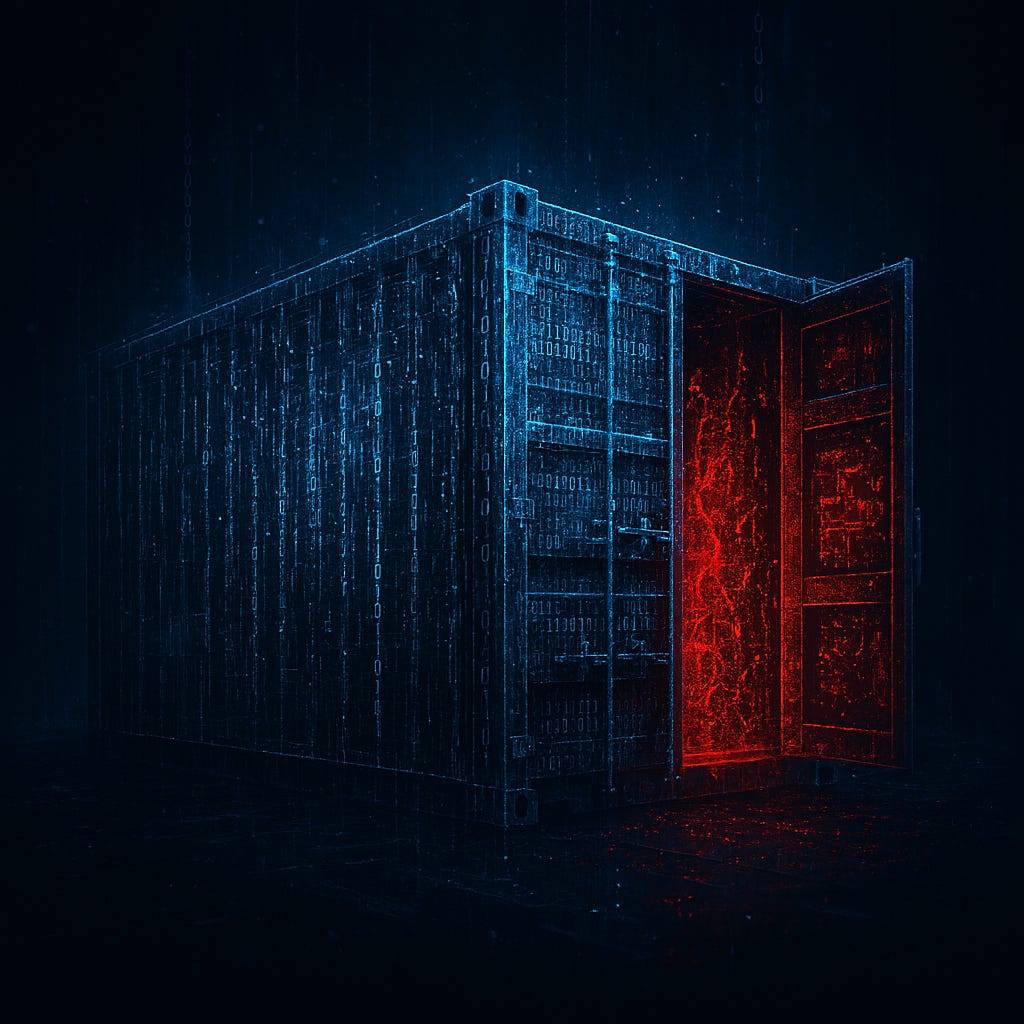
The core issue in software networks today isn’t the flattening process—it is the blind trust that occurs during the thawing phase.
Traditionally, enterprise applications are engineered to automatically unpack incoming byte streams the moment they hit the digital loading dock. The system implicitly assumes that whatever data arrives is safe, unaltered, and legitimate.
This structural blind spot creates an open door. If an external data stream is intercepted or modified before it reaches the receiving system, a bad actor can easily alter the sequence of the raw bytes. They can alter data length variables to trigger system crashes, or embed malicious instructions directly into the reassembly blueprints.
When the target system automatically thaws that modified data stream into its memory, it executes those hidden instructions without checking them first. The software doesn’t just read the incoming data; it accidentally hands full backend command control over to a corrupted script.
We have spent decades building faster, more complex software layers while leaving the digital unpacking docks completely unguarded.
2026 Market Landscape: What We Are Missing
As organizations rush to scale high-speed automation and language models, the gap between data speed and data pipeline security is widening — and three structural blind spots are driving most of the risk. To understand where the infrastructure is failing, we have to look at the current market landscape:
The Saturated Layer (Reactive Noise): The market is flooded with post-build code scanners and vulnerability dashboards. These are reactive commodities. They look at static files after code is written and dump thousands of generic alerts on engineering desks, causing massive alert fatigue while doing nothing to protect active, moving data pipelines in real time.
The Widely Used Standards (Speed over Safety): High-velocity enterprises are rapidly moving away from basic text formats (like JSON) and adopting ultra-fast binary serialization formats like Protobuf or FlatBuffers. These formats compress data beautifully and accelerate pipelines, but they still natively trust the payload upon arrival. They simply move the risk faster.
The Ultimate Blind Spot (AI Models): Advanced AI models are routinely saved, exported, and shared using highly insecure, legacy serialization frameworks (such as Python’s default pickle format). Enterprise teams are regularly downloading open-source, pre-trained models that double as hidden digital Trojan horses. These corrupted model payloads completely bypass standard perimeter firewalls the moment they are deserialized. The Python pickle security risk embedded in these workflows is well-documented in security research yet almost universally ignored at the enterprise procurement level.
This is the same architectural mismatch I explored at the ERP layer in Why Legacy ERP Systems Reject AI Integration
Shifting to Intelligent Guardrails
Trying to fix this by writing endless manual code patches or applying rigid, static validation rules to every individual software script creates an operational logjam. It slows down software delivery and fails against dynamic, evolving payloads.
The path forward requires shifting from reactive code fixing to real-time pattern validation before data is thawed.
This is where lightweight machine learning models can be positioned directly at network transport boundaries. Instead of relying on predictable, easily bypassed safety rules, these models are trained to instantly recognize the structural byte layout of a healthy, clean data stream.
When a serialized data packet arrives, the guardrail inspects the byte configuration in milliseconds. If it flags an irregular length field, an abnormal structural variation, or an unexpected pattern tucked inside an imported AI model file, it instantly quarantines the packet before the application ever attempts to open it.
The Operational Prerequisites
You cannot drop an intelligent tool into a broken, messy data architecture and expect immediate safety. Before any advanced guardrails can be deployed, engineering teams must establish two fundamental baselines:
Enforce Strict Data Blueprints (Schemas): An intelligent validation model cannot confidently identify a “corrupted” byte layout if the organization hasn’t clearly defined what a “perfect” payload looks like. Systems must move away from unmapped, free-form data styles and enforce strict, typed definitions (like Protobuf schemas).
Map the Live Pipeline Architecture: You cannot defend a data highway you cannot see. Teams must replace static documentation and spreadsheets with live infrastructure maps that chart exactly where data enters, transforms, and exits across the software ecosystem.
True operational resilience requires looking past front-end features and securing the hidden processing pipelines that link systems together. By replacing blind trust with automated validation at the digital loading dock, enterprises can safely harness high-speed data formats without risking catastrophic structural failure.
These pipeline bottlenecks don't just create security risks — they slow down entire project timelines too. I covered the operational impact in detail in The Velocity Trap
What are your thoughts on how your team handles data serialization boundaries? Let’s connect and keep the discussion going.